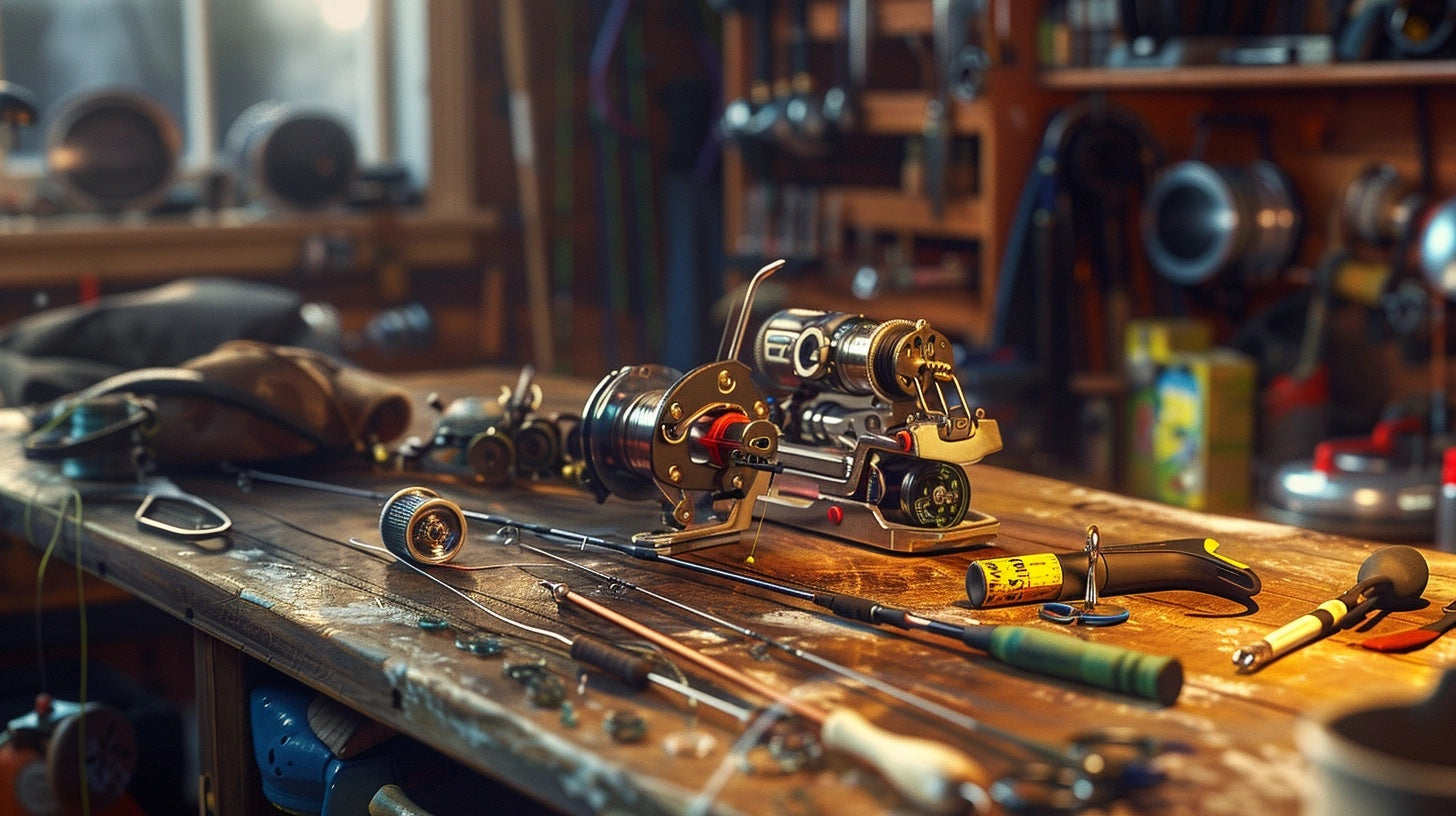
Proper fishing gear maintenance helps keep your equipment working smoothly and lasting longer. Saltwater, sand, and general wear can quickly damage rods, reels, lines, and tackle if they are not cleaned and stored properly. A few minutes of routine care after each trip can prevent corrosion, reduce line failure, and keep your gear ready for the next fishing adventure.
1. Cleaning Your Fishing Rods and Reels
Your fishing rod and reel take a lot of punishment every time you head out, especially when fishing around the coast where saltwater and sand can quickly cause corrosion. Regular cleaning helps keep everything functioning smoothly.
Rods: Wipe down your rod with a damp cloth after every trip to remove salt, sand, and dirt. Check for cracks, loose guides, or worn grips.
Proper fishing gear maintenance keeps rods, reels, lines, and tackle working smoothly while helping anglers avoid frustrating gear failures on the water.
Fishing gear works hard. Between saltwater spray, sand, sun exposure, and the occasional enthusiastic fish, your equipment takes a beating every time you head out. A few minutes of care after each trip can prevent corrosion, reduce line failure, and keep everything ready for the next fishing adventure.
Fun fact: most gear failures on fishing trips happen because of poor maintenance, not because the equipment was cheap.
Taking care of your gear means fewer lost fish, smoother casts, and less time fixing problems when you should be fishing.
Cleaning your fishing rods and reels
Your Fishing Rods and Reels handle constant pressure while casting, retrieving, and fighting fish. Saltwater and sand are the biggest enemies, especially for anglers fishing around beaches, harbours, and rocky coastlines.
Rods should be wiped down with a damp cloth after each trip to remove salt and sand. While cleaning, check for cracks, loose guides, or worn grips that could affect casting performance.
Reels should be rinsed gently with fresh water after saltwater use. A soft brush can help remove sand and debris around the spool and handle. Applying a small amount of reel oil occasionally keeps moving parts working smoothly.
Fun fact: storing reels with the drag tightened can slowly damage internal components. Loosening the drag between trips helps extend reel life.
A few minutes of cleaning can keep rods casting smoothly and reels spinning freely for years.
Caring for your fishing line
Fishing lines slowly weaken over time due to sunlight, water exposure, and friction against rocks or fish teeth.
Regular checks help prevent the worst feeling in fishing: losing a good fish because your line suddenly snaps.
Monofilament Lines and Fluorocarbon Lines should be replaced regularly, especially if they become brittle, faded, or develop tight coils.
Braided line lasts longer but should still be checked for frayed sections. Trimming worn areas can prevent weak spots during a fight.
Fun fact: UV exposure from sunlight slowly weakens many fishing lines, which is why storing gear out of direct sunlight helps preserve line strength.
Keeping spare Fishing lines and leaders organised in Tackle Boxes makes quick replacements much easier.
Maintaining hooks, lures, and terminal tackle
Small pieces of tackle are often the easiest to ignore but they can make the biggest difference to your catch rate.
Dull or rusty hooks struggle to penetrate properly, which means fish can shake free more easily.
Hooks should be sharpened regularly using a hook sharpener and replaced if rust appears.
Lures should be rinsed after saltwater trips, especially metal lures and soft plastics that trap salt residue.
Small tackle items like Fishing Swivels, Fishing Sinkers, and Lure Snaps & Connectors should be kept organised inside divided tackle boxes to prevent tangles and rust.
Fun fact: many anglers carry multiple tackle boxes so they can separate lures, terminal tackle, and tools.
Keeping tackle organised saves time when tying rigs and avoids the dreaded “tackle soup” inside your gear bag.
Storing your gear properly
How you store fishing gear between trips plays a huge role in how long it lasts.
Fishing rods are best stored vertically on a rack to prevent unnecessary pressure on the blank. Reels should be kept in dry environments and not left under tension for long periods.
Tackle and accessories should be stored inside waterproof or ventilated Tackle Boxes to prevent moisture buildup.
Many anglers also add small moisture absorbers inside tackle boxes to reduce rust and corrosion.
Proper storage keeps gear organised and ensures everything is ready when the next fishing opportunity appears.
Wrap up: small maintenance, big difference
Fishing gear maintenance might not be the most exciting part of fishing, but it makes a huge difference on the water.
Clean rods cast better, well-maintained reels retrieve smoothly, sharp hooks land more fish, and organised tackle saves time when conditions change.
At HOOK LINE SINKER, our range of Fishing tools, Tackle, and Tackle Boxes helps anglers keep gear organised, protected, and ready for the next fishing trip.
Because when the fish start biting, the last thing you want is your gear letting you down.
Reels: Rinse reels gently with fresh water after saltwater use. Use a soft brush to remove dirt and debris, and apply reel oil occasionally to keep moving parts lubricated. Store reels with the drag loosened to avoid constant pressure on the internal components.
Taking a few minutes to clean your rod and reel after each trip will help them cast smoothly and last much longer.
2. Caring for Your Fishing Line
Fishing lines gradually weaken due to exposure to water, sunlight, and friction. Regular checks can help prevent losing fish due to unexpected line failure.
Monofilament and Fluorocarbon: Replace these lines regularly, especially if they become brittle, faded, or develop memory coils.
Braided Line: Check for fraying or worn sections and trim off damaged areas. Braided lines tend to last longer but still require occasional replacement.
Storage: Avoid storing fishing line in direct sunlight or extreme heat. Keeping your gear in a cool, dry place helps maintain line strength.
Changing worn fishing line is a simple step that can prevent losing a good fish at the worst possible moment.
3. Maintaining Hooks, Lures, and Tackle
Rusty or dull hooks can easily cost you a fish. Keeping your tackle clean and organised makes a big difference.
Hooks: Sharpen hooks regularly with a Hook Sharpeners and replace any that show signs of rust. Sharp hooks penetrate faster, increasing hook-up rates and reducing the chance of losing fish.
Lures: Rinse lures after each trip, especially if they have been used in saltwater. This is particularly important for metal lures and soft plastics.
Tackle Storage: Keep tackle dry and organised in a well-ventilated tackle box. Moisture is the main cause of rust, so adding silica gel packs can help absorb excess moisture.
Well-maintained tackle means fewer lost fish and a much smoother day on the water.
4. Proper Storage to Prevent Damage
How you store your fishing gear between trips has a big impact on how long it lasts.
Rods: Store rods vertically on a rack when possible to prevent bending or unnecessary pressure on the blank.
Reels: If storing for long periods, keep reels in a dry place and avoid leaving them under tension.
Tackle and Tools: Organise lures, hooks, and accessories in waterproof storage containers or tackle boxes to protect them from moisture.
Keeping your gear organised also means everything is ready when the next fishing trip comes around.
Final Thoughts
Taking a few minutes to clean and store your fishing gear properly can save time and money in the long run. Well-maintained gear casts better, performs more reliably, and lasts far longer.
At HOOK LINE SINKER we stock practical fishing tools, tackle, and storage gear designed to help anglers keep their equipment organised and protected between trips.
Proper care today means your gear will be ready when the next fishing opportunity appears.