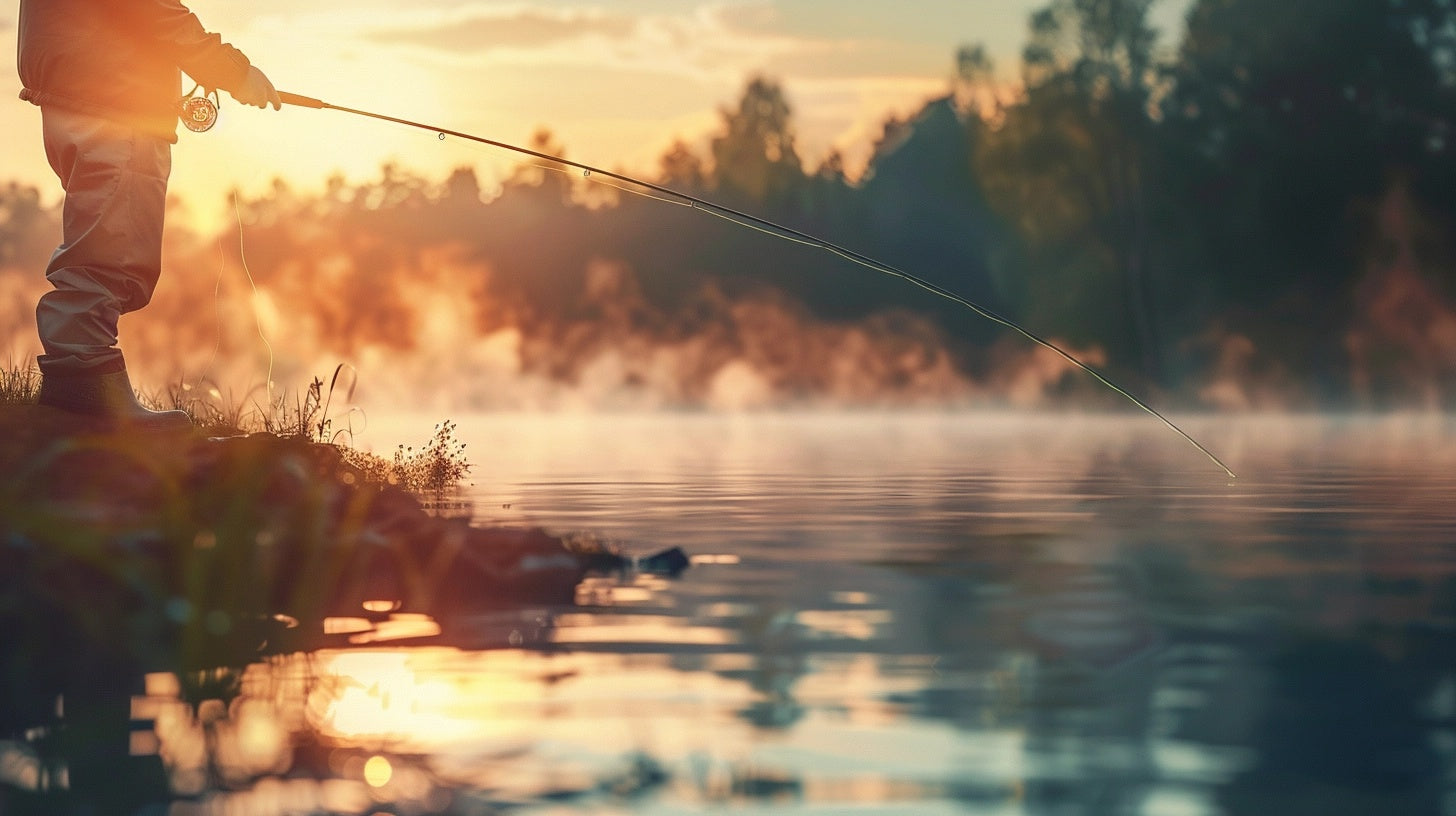
A good fishing rod can make the difference between a relaxing day on the water and a frustrating one. The right rod improves casting distance, accuracy, and how well you control fish once they’re hooked.
Choose the wrong rod and suddenly everything feels harder. Casts land short, hooks don’t set properly, and somehow your line ends up wrapped around the rod tip or the nearest tree.
The good news is that picking a fishing rod isn’t as complicated as it first seems. Once you understand rod types, length, power, and materials, choosing the right setup becomes much easier.
Fun fact: modern fishing rods are incredibly strong for their weight. A high-quality graphite rod can flex dramatically without breaking, which helps absorb the sudden runs and head shakes fish are famous for.
Understanding the Different Types of Fishing Rods
Fishing rods are designed for different fishing techniques and environments. Knowing the basic types helps narrow down which rod will suit you best.
Spinning Rods are one of the most versatile options available. They are easy to use and work with spinning reels, making them a great choice for beginners and experienced anglers alike. Spinning rods are commonly used in both freshwater and light saltwater fishing.
Casting Rods are built for accuracy and power. They are usually paired with baitcasting reels and are often used when casting heavier lures or targeting larger fish.
Telescopic Fishing Rods collapse down into a compact size, making them ideal for travel, bike fishing, or anglers who want gear that’s easy to carry. They are especially popular with people who like spontaneous fishing trips.
Surf Rods are long rods designed for casting long distances from beaches and rocky shorelines.
Understanding the type of fishing you plan to do will help you decide which rod category is right for you.
Fun fact: surf rods can be more than four metres long, giving anglers the extra leverage needed to cast bait beyond breaking waves.
Choosing the Right Rod Length
Rod length affects both casting distance and control.
Short rods between about 1.5 and 2 metres offer excellent accuracy and control. These rods are useful when fishing in tight areas like streams, under trees, or around docks.
Medium-length rods between 2 and 2.4 metres provide a good balance between distance and control. This range is the most popular choice for general fishing.
Long rods over 2.4 metres are designed for distance casting. These rods are commonly used for surf fishing or situations where reaching distant water is important.
If you're new to fishing, a spinning rod around 2 to 2.1 metres is often considered the most reliable all-round option.
Fun fact: longer rods act like a lever when casting, helping anglers generate more line speed and distance.
Understanding Rod Power and Action
Two important features of any rod are power and action.
Rod power describes how much force it takes to bend the rod.
Light power rods are designed for smaller fish and lighter tackle.
Medium power rods are versatile and work well for many fishing situations.
Heavy power rods are built for larger fish or heavy fishing conditions.
Rod action refers to where the rod bends.
Fast action rods bend mostly near the tip. They provide excellent sensitivity and allow quick hook sets.
Medium action rods bend through the middle and provide a balanced mix of flexibility and strength.
Slow action rods bend along most of the rod and can help when casting very light lures.
Choosing the right combination of power and action helps improve casting, hook sets, and control during a fight.
Fun fact: many lure anglers prefer fast action rods because they help detect even subtle bites.
Fishing Rod Materials
Most fishing rods are made from fiberglass, graphite, or a combination of both.
Fiberglass rods are durable and forgiving. They are often recommended for beginners or situations where rods might take a bit of rough treatment.
Graphite rods are lighter and more sensitive. They allow anglers to feel small bites and subtle movements through the rod.
Composite rods combine fiberglass and graphite to create a balance of durability and sensitivity.
For many anglers, a medium power graphite rod offers an excellent mix of performance and versatility.
Fun fact: graphite rods became widely popular in the 1970s and quickly changed how anglers could detect bites.
Matching Your Rod With the Right Reel
A fishing rod works best when paired with the right reel.
A spinning rod paired with a spinning reel is one of the easiest setups to learn and is widely used by anglers around the world.
Casting rods are designed to work with baitcasting reels, which provide greater casting control but require more practice to master.
A balanced rod and reel setup makes casting smoother and helps reduce line tangles.
Fun fact: almost every angler who learns baitcasting reels experiences at least one dramatic line tangle, often called a “bird’s nest.”
Finding the Right Rod for Your Fishing Style
The best fishing rod depends on where you fish and what species you target.
Anglers who travel often or enjoy exploring new fishing spots frequently prefer Telescopic Fishing Rods because they are compact and easy to carry.
If you enjoy general lure fishing or want a versatile setup, Spinning Rods are a reliable option.
Anglers targeting larger fish or using heavier lures often prefer Casting Rods for their accuracy and control.
Understanding the differences between rod types, lengths, and materials will help you choose a rod that suits your fishing style and improves your overall experience on the water.
At HOOK LINE SINKER, we stock a wide range of Fishing Rods, including Spinning Rods, Casting Rods, and Telescopic Fishing Rods. Pair your rod with quality Reels such as Spinning Reels or Baitcasting Reels, and keep your gear organised with Tackle Bags & Gear Storage or protective Rod & Reel Bags.
Choose the right rod, grab your gear, and enjoy the moment when that first cast lands exactly where you meant it to.